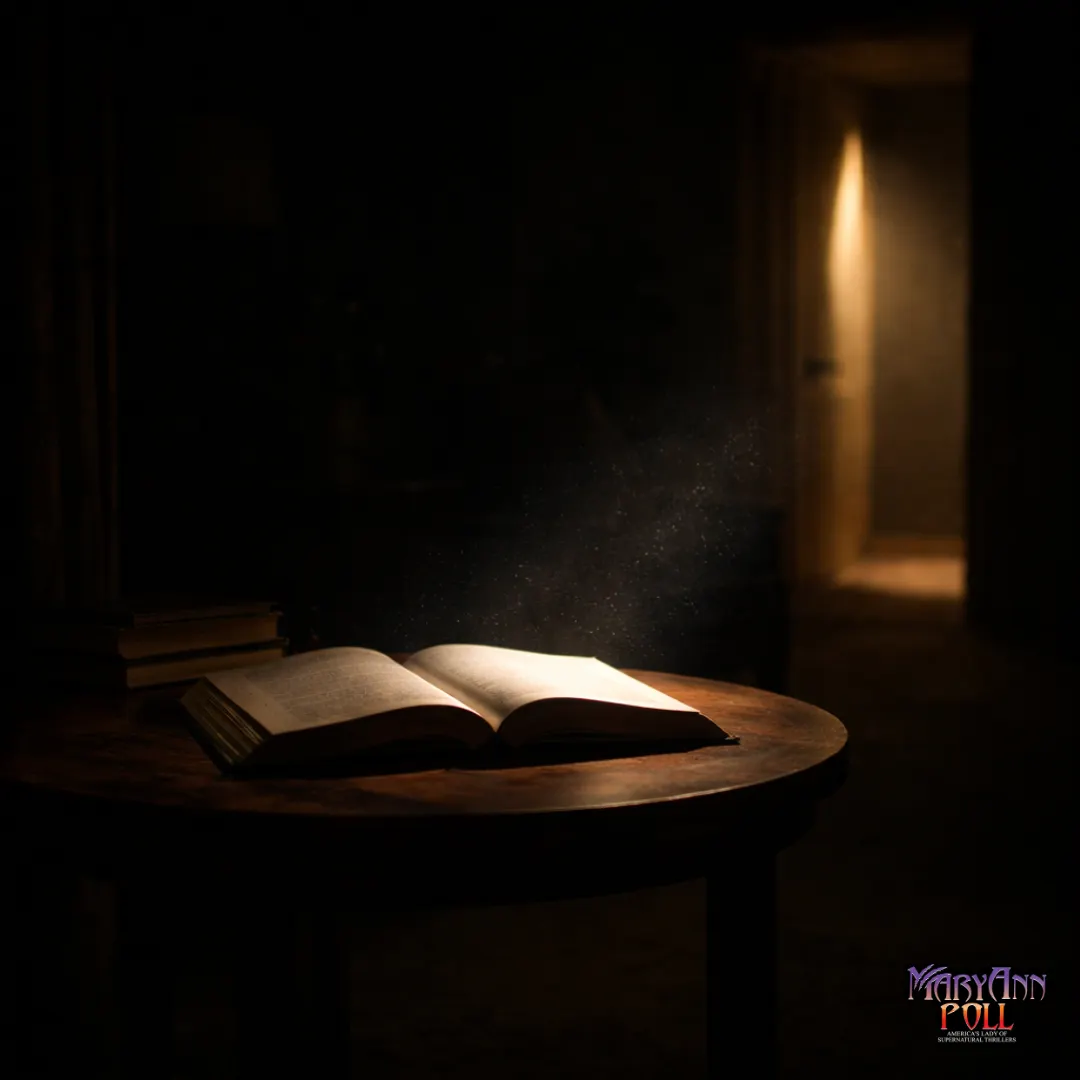
There is a difference between darkness that exists to shock and darkness that exists to reveal something deeper.
Not all stories treat darkness the same way. Some use it as an end in itself. The goal is to disturb, to unsettle, to leave an impression that lingers in discomfort long after the story ends. And while that approach has its place, it is not the kind of story I am drawn to write, and it is not the kind of story I want my readers to carry with them.
For me, darkness must have a purpose. It must lead somewhere.
When I introduce something dark into a story, it is never there simply to exist. It is there to challenge something. To test something. To bring a truth into focus that would not be as visible without it. Darkness, in that sense, becomes part of the journey rather than the destination.
Without it, there is no tension. But without purpose, there is no meaning.
This is where the line between horror and supernatural thriller becomes even clearer. Darkness in a supernatural thriller is not random, and it is not empty. It is intentional. It is part of a larger movement, one that points beyond itself rather than ending in itself. It carries weight because it is connected to something greater than the moment.
It asks a question that every reader can feel, even if they cannot immediately put it into words.
What happens when something real pushes against what we believe?
In my writing, darkness is often the moment when a character is forced to decide who they are. Not when everything is comfortable or predictable, but when everything becomes uncertain. When fear is present. When the outcome is unclear. That is where true character is revealed, not through ease, but through pressure. And courage is never fully visible until it is tested.
That is why I believe darkness, when used with purpose, is not something to avoid. It is something to understand. It reveals what is hidden. It brings things to the surface. It forces choices that would otherwise remain unmade. It exposes what matters most when everything else falls away.
But it must always lead somewhere. Because if darkness is the end of the story, then the story offers no direction, no resolution, and no reason to keep moving forward. It leaves the reader with weight, but no answer to carry it.
Faith changes that. Faith reminds us that darkness is not final. That even when it is present, it is not without limit. It does not have the last word. That truth shapes the way I tell stories. It keeps the tension real, but it also keeps the direction clear. It allows the story to explore fear without being defined by it.
The battle matters. The outcome matters. And the reader is never left without the sense that something greater is at work beneath the surface, even when it cannot be fully seen.
That is the difference. Darkness may enter the story, but it does not define it. It reveals it. It sharpens it. It gives meaning to the choices that follow and the courage it takes to stand when everything feels uncertain.
And if you are drawn to stories where darkness has weight, where the battle is real, and where the fight itself matters, I invite you to step into that world with me.
Start the adventure and discover where it begins with Ravens Cove, Book 1 at maryannpoll.com