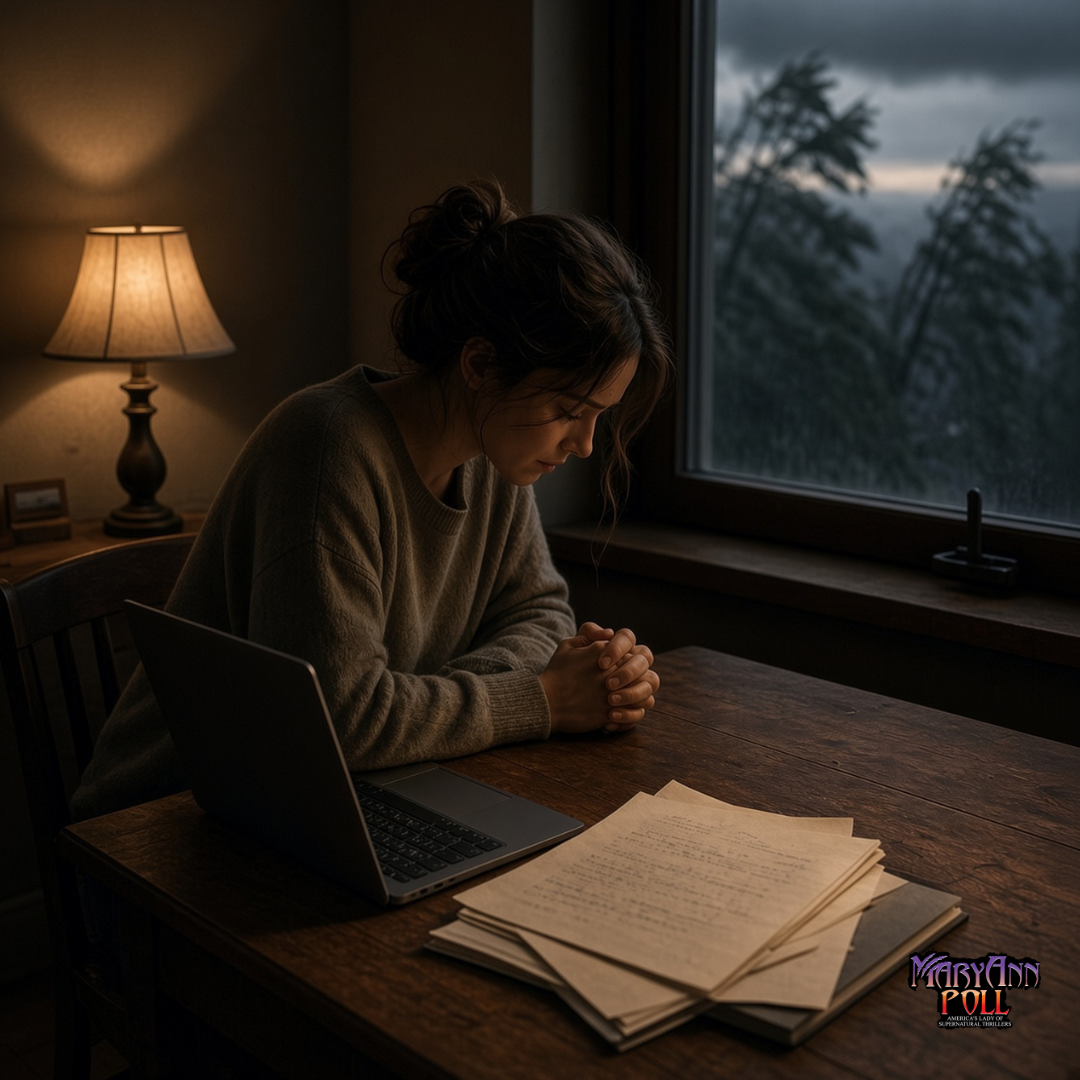
I came to a scene in Ravens Cove and went completely blank.
I knew the church had burned. I knew a mob had gathered outside it, the same people from the town’s other congregation, whipped up by a man who wanted Paul Lucas gone. What I did not know was how any of them, Paul, his wife, his little handful of parishioners, were supposed to survive what came next. I stared at the page for a long while with no idea how to save them.
So I did the only thing I knew to do. I asked Jesus what come’s next?
I did not close my laptop and wait for an answer. I just started typing. And the scene formed almost on its own. A small dirt cloud rising up in front of the angry crowd. Beginning to twirl. A cold wind picking up as Paul’s little congregation joined hands and prayed, until the wind grew strong enough that the mob could no longer hold their ground, falling backward one into another like dominoes, until the cloud vanished as quickly as it came.
I remember sitting back from the keyboard afterward and thinking, that’s strange. I almost deleted it. It felt like it had wandered in from somewhere else, a small whirlwind in the middle of a chapter that was supposed to be about a burning church and a broken pastor. I nearly cut it and moved on to something that made more obvious sense.
I am glad I didn’t. That scene became a hinge the rest of the book turned on. Without it, I am not sure I would have found my way to the ending at all.
“Sometimes, God answers prayer in a way no one can dispute. I believe that’s called a miracle.”
That line belongs to Grandma Bricken, an elder in the story, not to me. And that is really the heart of what I want to tell you today. When I am writing, my characters take on their own lives. I do not always decide what they say. Often, I simply listen, and they tell me.
I have thought about that a great deal since. I had prayed for direction on the page, and what came back was not a plot device I engineered. It was a small miracle inside a story about faith, arriving the same way I believe real miracles so often do, quietly, through someone else’s mouth, in the middle of an ordinary afternoon, easy to miss if you are not paying attention.
I do not think that was an accident. I write supernatural fiction because I believe the line between the world we can see and the world we cannot is thinner than most people assume. That scene is proof of it to me, not because a dirt cloud is dramatic, but because I asked for help with a blank page and was handed a moment about prayer itself, answered in a way no one in the story could explain away, by a character who was not entirely mine to begin with.
If you write, or paint, or build anything that asks you to make something out of nothing, I hope you have had a moment like that one. And if you haven’t yet, I hope you will. Sometimes the page goes blank not because the story has run out, but because it is waiting on you to ask for help before it will tell you the rest.
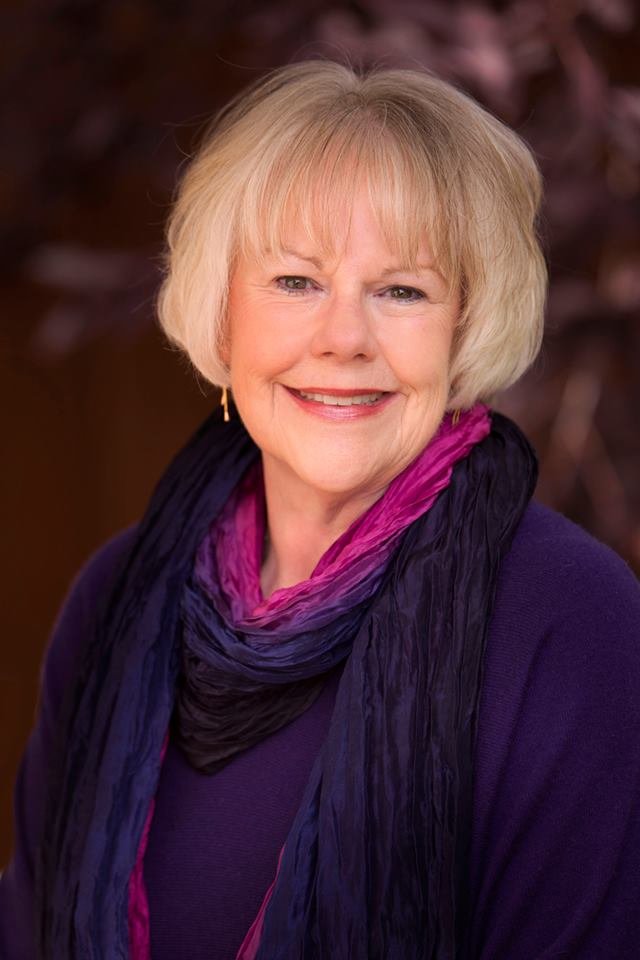
Mary Ann Poll is the author of the six-book Ravens Cove Iconoclast supernatural thriller series and host of the podcast Real Ghost Chatter. Learn more at maryannpoll.com.