Why fear divides us, and love brings us home.
The election is over. For some, the results brought relief. For others, they brought worry. And for a lot of us, the whole season left something behind that’s harder to name: a heaviness, a suspicion, a quiet question about the people living right next door.
I’m not going to talk about candidates or parties here. That’s not what this space is for. But I do want to talk about that heaviness, because I think I know where it comes from.
If you’ve read my books, you know I write about spiritual warfare. In my stories, darkness rarely shows up with horns and a pitchfork. It works more quietly than that. It whispers. It isolates. It convinces good people that the person beside them is the threat. Divide a town, and you don’t have to conquer it. It will tear itself apart.
That isn’t just fiction. Scripture tells us plainly:
“For we wrestle not against flesh and blood, but against principalities, against powers, against the rulers of the darkness of this world.” (Ephesians 6:12)
Not flesh and blood. Not the neighbor with the different yard sign. Not the cousin who voted the other way. Not the coworker whose post made your stomach knot up.
Fear is one of the enemy’s oldest tools. It makes us shrink back, lock the door, and assume the worst. And it rarely announces itself. It just feels like being careful, or being right.
“Divide a town, and you don’t have to conquer it. It will tear itself apart.”
But God hasn’t given us that.
“For God hath not given us the spirit of fear; but of power, and of love, and of a sound mind.” (2 Timothy 1:7)
When a lawyer asked Jesus, “And who is my neighbour?” He didn’t answer with a definition. He told a story about a man left beaten by the road, two religious men who passed him by, and a Samaritan, someone the listeners had every reason to distrust, who stopped and helped. Then Jesus turned the question around: which one was the neighbor? (Luke 10:29–37)
The point wasn’t who deserved help. The point was who chose to love.
Alaska taught me something about this. Winter up there doesn’t care how you vote. When it’s thirty below and somebody’s truck is in the ditch, you stop. Nobody asks first. Where the nearest help might be miles away, being a neighbor isn’t a nice idea. It’s how people survive.
I think we could use a little more of that spirit right now.
So here’s my gentle invitation for this week. Look for one small way to be a neighbor, especially to someone you suspect sees the world differently than you do. Wave from the driveway. Carry over a plate of cookies. Ask how their family is doing, and really listen to the answer. Pray for them by name.
It won’t fix everything. But every small act of love is a light switched on in a dark room, and darkness has never once won against the light.
“There is no fear in love; but perfect love casteth out fear.” (1 John 4:18)
Fear comes from the enemy. Love comes from God. And we get to choose which one we carry next door.
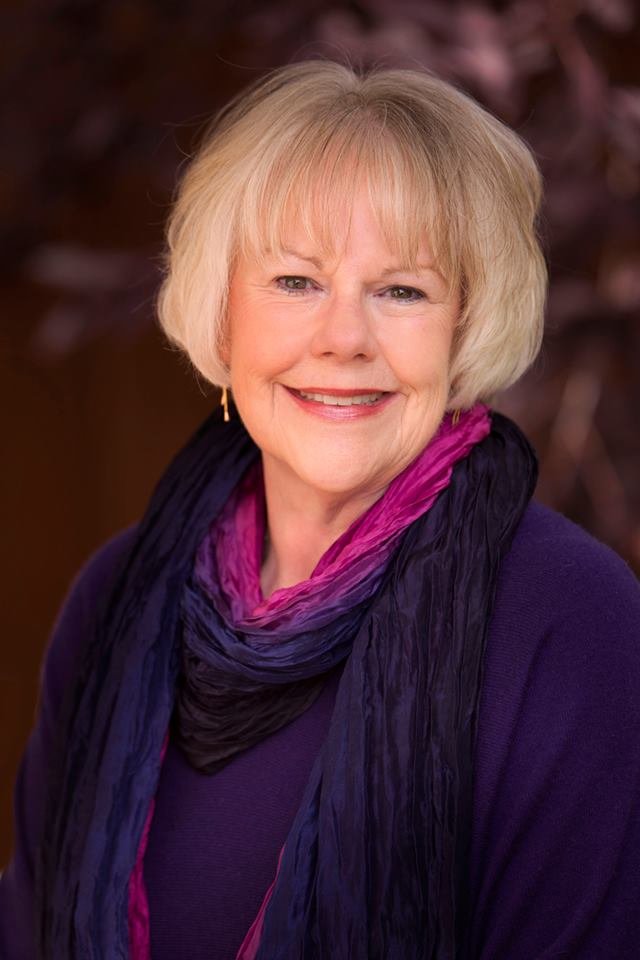
Mary Ann Poll is known as America’s Lady of Supernatural Thrillers. She is the author of the six-book Ravens Cove Iconoclast series and host of Real Ghost Chatter, a weekly podcast of true supernatural stories. Her books contain no profanity or explicit content and are built on one unshakable conviction: light prevails over darkness.